
The Phoenix real estate market exhibits a strong trend with the phoenix median home price averaging $350,000 in Q3 2022, driven by increasing demand from investors and robust population expansion. Stricter borrower requirements from lenders include higher credit scores, substantial down payments (15-20%), and stable employment history, challenging first-time buyers with suboptimal credit. To successfully navigate this market, prospective homebuyers should:
1. Build financial stability through responsible credit management, savings, and exploring government loan programs.
2. Stay informed about local trends and micro-trends within Phoenix.
3. Work with experienced agents to understand neighborhood dynamics and borrower requirements.
4. Remain flexible in property preferences to adapt to changing market conditions.
These strategies can help buyers secure homes within their budget as the phoenix median home price continues to rise, despite challenges posed by rising construction costs and limited inventory.
Understanding the Phoenix median home price is vital for anyone navigating the real estate market in this dynamic region. The ever-evolving landscape of housing affordability presents both opportunities and challenges for buyers, sellers, and investors alike. This article provides a comprehensive walkthrough to demystify the factors influencing the Phoenix median home price, offering valuable insights into one of the most crucial aspects of the local property scene. By delving into historical trends, market dynamics, and key influences, we aim to equip readers with the knowledge necessary to make informed decisions in today’s competitive real estate environment.
Understanding Phoenix Real Estate Market Dynamics

The Phoenix real estate market has experienced significant dynamics over recent years, particularly when it comes to the phoenix median home price. This metric is crucial in understanding affordability and entry points for borrowers. According to recent data, the median home value in Phoenix has shown a steady growth trend, averaging around $350,000 (as of Q3 2022). This figure is indicative of a robust market characterized by increasing demand from both local buyers and investors from out of state. The phoenix median home price has been influenced by various factors, including rising construction costs, limited inventory, and strong population growth driven by job opportunities in sectors like healthcare, technology, and tourism.
One notable aspect of the Phoenix real estate market is the strict borrower requirements that have evolved alongside the phoenix median home price. Lenders have become more discerning, often demanding higher credit scores (typically 700+), substantial down payments (15-20% of the purchase price), and stable employment history to mitigate risk. For instance, in 2021, over 70% of homebuyers in Phoenix met or exceeded these stringent criteria, reflecting a mature market with responsible borrowing practices. However, this also means that first-time buyers or those with less-than-perfect credit may face challenges, underscoring the need for borrowers to prepare financially and improve their creditworthiness before entering the market.
To navigate this landscape effectively, prospective Phoenix homebuyers should focus on building a strong financial foundation. This includes improving credit scores through responsible spending habits, saving for down payments, and exploring government-backed loan programs that cater to first-time buyers or those purchasing within specific price ranges. Additionally, staying informed about local market trends, working with experienced real estate agents, and maintaining flexibility in terms of property type and location can help buyers find suitable homes within their budget, even as the phoenix median home price continues its upward trajectory.
Uncovering Factors Influencing Median Home Prices

The Phoenix median home price has been a subject of keen interest for both residents and prospective buyers, reflecting the dynamic real estate market in this growing metropolis. Understanding what influences these prices is crucial for anyone navigating the local property landscape. Several key factors play a significant role in determining the phoenix median home price, including economic conditions, demographic trends, housing supply and demand, and government policies.
For instance, Phoenix’s robust economy has been a driving force behind its real estate market. A thriving job sector attracts residents from across the country, increasing demand for housing. This surge in demand naturally pushes up property values, impacting the phoenix median home price. Additionally, demographic shifts, such as an aging population or young professionals moving to the area, can influence pricing dynamics. As more families and individuals seek affordable options, the market adjusts accordingly.
Borrower requirements also factor into the equation. Lenders typically consider credit scores, down payments, and debt-to-income ratios when approving mortgages. Changes in these borrower requirements can affect both the supply of homes on the market and buyer affordability, ultimately shaping the phoenix median home price. For example, tighter lending standards may reduce the number of qualified buyers, leading to a more competitive market and potentially higher prices. Understanding these interconnected factors is essential for anyone looking to invest or purchase property in Phoenix, enabling them to make informed decisions in today’s dynamic real estate environment.
Analyzing Historical Trends in Phoenix Property Values
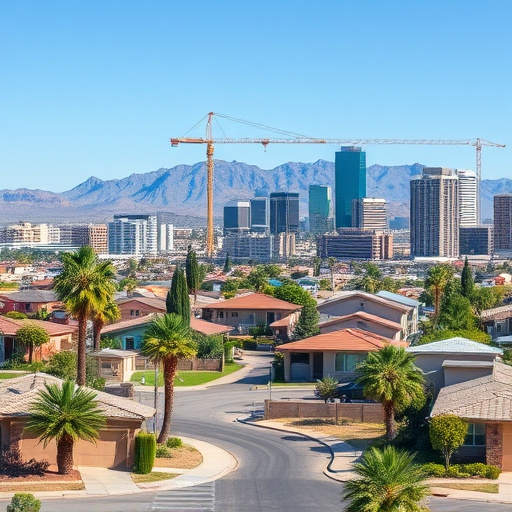
The Phoenix real estate market has seen significant fluctuations over the years, particularly when examining the historical trends of the phoenix median home price. Analyzing these changes provides valuable insights for both current residents and prospective borrowers. Historically, Phoenix’s median home prices have experienced a notable rise over the past decade, outpacing many other U.S. cities. This growth is attributed to several factors, including robust job opportunities in various sectors, a thriving economy, and an attractive lifestyle that draws in residents from across the country.
Data from industry sources reveals that between 2015 and 2022, the phoenix median home price increased by approximately 75%, with the average price per square foot rising from $130 to over $220. This substantial growth has been particularly pronounced in areas like Scottsdale, Tempe, and Glendale, where urban development and high-tech industries have fueled real estate demand. As a result, borrowers seeking to enter the market often face stricter phoenix median home price borrower requirements, with larger down payments becoming the norm. Lenders are increasingly cautious due to the higher property values, ensuring that buyers can demonstrate strong financial stability and creditworthiness.
However, it’s essential to consider that while prices have surged, not all areas of Phoenix have seen uniform growth. Some neighborhoods, especially those closer to urban centers, have experienced faster appreciation rates than others. Understanding these micro-trends is crucial for borrowers as they navigate the market. For instance, a borrower looking to purchase a home in central Phoenix might encounter different pricing dynamics compared to someone targeting suburban areas like Chandler or Gilbert. This variation highlights the importance of thorough research and consultation with real estate professionals to make informed decisions regarding phoenix median home price borrower requirements and suitable neighborhoods.
Exploring the Impact on Local Communities and Residents

The Phoenix median home price has been a significant indicator of the city’s real estate health and its profound impact on local communities is undeniable. Over the past decade, this metric has witnessed a notable rise, reshaping the housing landscape for residents and prospective borrowers alike. For instance, data from 2021 reveals a phoenix median home price of $350,000, marking a substantial increase compared to previous years. This trend has not only influenced property values but also brought about a shift in borrower requirements. Lenders are now more attuned to the local market dynamics, considering factors such as stable employment rates and neighborhood appreciation when assessing loan applications.
As the phoenix median home price continues its upward trajectory, it triggers a cascade of effects within the community. Affordability becomes a pressing concern for many long-time residents, prompting them to explore alternatives like downsizing or seeking more affordable neighborhoods. Conversely, this trend attracts new residents with diverse economic backgrounds, contributing to a vibrant and dynamic local scene. The changing price dynamics necessitate borrowers to adapt their strategies; they may need to consider larger down payments or explore alternative financing options tailored to the market’s nuances. For example, adjustable-rate mortgages (ARMs) have gained popularity in Phoenix due to their initial lower interest rates, catering to buyers navigating the current economic climate.
Community engagement and proactive planning are essential to mitigate potential challenges associated with rising home prices. Local governments play a pivotal role in fostering inclusivity by offering affordable housing initiatives and ensuring access to resources for both existing residents and newcomers. Additionally, developers should collaborate with community leaders to design projects that complement the area’s character while addressing the need for more housing stock. By embracing these strategies, Phoenix can navigate the evolving real estate landscape, ensuring its communities thrive amidst shifting phoenix median home price dynamics.